



Difference between polyhouse and greenhouse
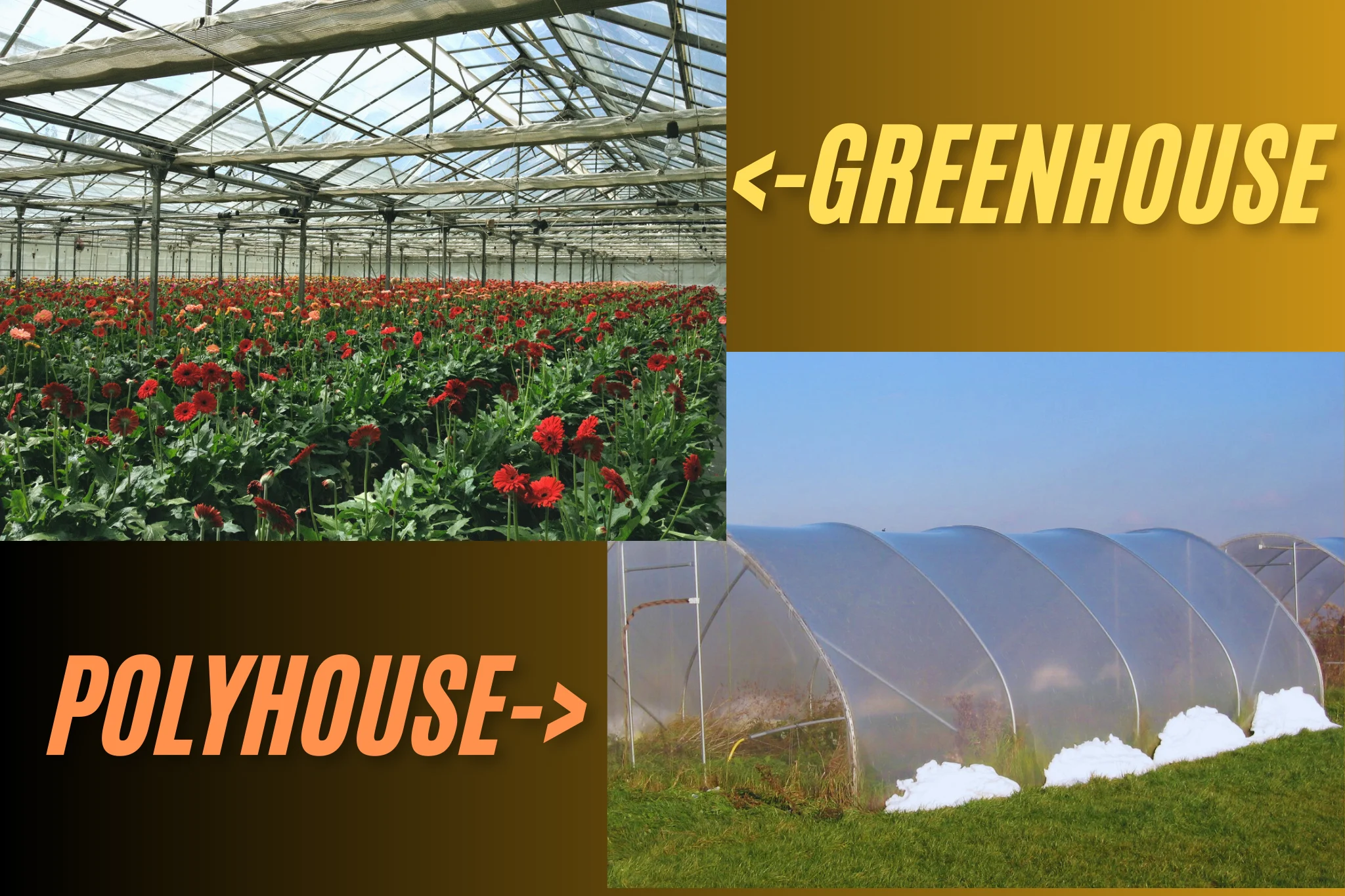
Both a greenhouse and a polyhouse are man-made constructions used to cultivate plants in a controlled setting. While often used interchangeably, these terms refer to distinct approaches for creating controlled environments. They protect plants from external conditions by forming a shield that allows sunlight to enter but prevents it from escaping. This creates a controlled temperature inside, which is optimal for cold regions. They act as a useful protective shield for plants for optimal growth and protection.
In the changed climatic conditions, polyhouses and greenhouses help farmers grow crops under controlled conditions and grow a variety of crops despite weather conditions. Also check, 'Rajasthan mandi rate today.
What is a greenhouse?
A greenhouse is a permanent structure, covered by transparent material like glass or polycarbonate panels. It is a permanent structure and enables air and moisture to pass through it, creating a warmer environment than the outside. This not only protects crops from the weather but also from diseases, pests, and produces high-quality crops. It is not easy to transport or dismantle these, and they are generally installed for the long term.
Key features of a greenhouse:
- Material: Greenhouses are sturdy structures made up of glass and polycarbonate sheets. These materials are transparent for sunlight to enter, and are durable, which last for years.
- Structure: These structures are usually made from wood, aluminium, and iron. Greenhouses are designed in various shapes, such as gable, arch, dome, slant-leg, and with and without vents.
- Durability: They are highly durable as made up of strong material. They can resist heavy rain, winds, and other weather conditions.
- Cost: Generally, a greenhouse involves a higher initial construction cost compared to a polyhouse, but it is a long-term investment, and stays strong for decades with a one-time investment. Also, check Kerala mandi rate today.
- Environmental control: Greenhouses are designed for precise environmental control. This often includes advanced systems for heating, cooling, ventilation, humidity control, CO2 enrichment and automated irrigation.
What is a polyhouse?
A polyhouse is a simpler version of a greenhouse, which is made up of polythene. It also creates a layer above crops to protect them from external elements. They are popular in India due to their low cost and ease of maintenance. They are constructed temporarily and are easy to build and dismantle.
Key features of a polyhouse:
- Material: A polyhouse is generally made of plastic sheets and supported by bamboo or wooden poles or iron rods, forming a dome-shaped structure.
- Structure: Polyhouse forms a tunnel or dome-shaped structure.
- Durability: They are less durable than a greenhouse, as it is made of cheap materials and used for temporary purposes. The polythene sheet requires regular replacement due to wear and tear from weather and UV degradation.
- Cost: It is significantly cheaper than a greenhouse and requires a low investment. It is more accessible to many farmers. Also, check 'How to Get Premium Prices at Mandi.'
- Environmental control: Polyhouses are naturally ventilated (using vents and foggers to regulate the temperature), in contrast to high-tech glass greenhouses. It also uses environmental regulators like fans, cooling pads.
Advantages and disadvantages of a greenhouse:
Advantages:
- Maximum control over temperature, humidity, light, and CO2, leading to optimal plant growth.
- It is highly durable.
- Superior light transmission.
- More retention from heat.
Disadvantages:
- High initial investment.
- Complex management.
- Higher Operating costs
- Less flexible, altering the structure can be difficult and costly.