



Digital tools for farming: Helping towards sustainable agriculture
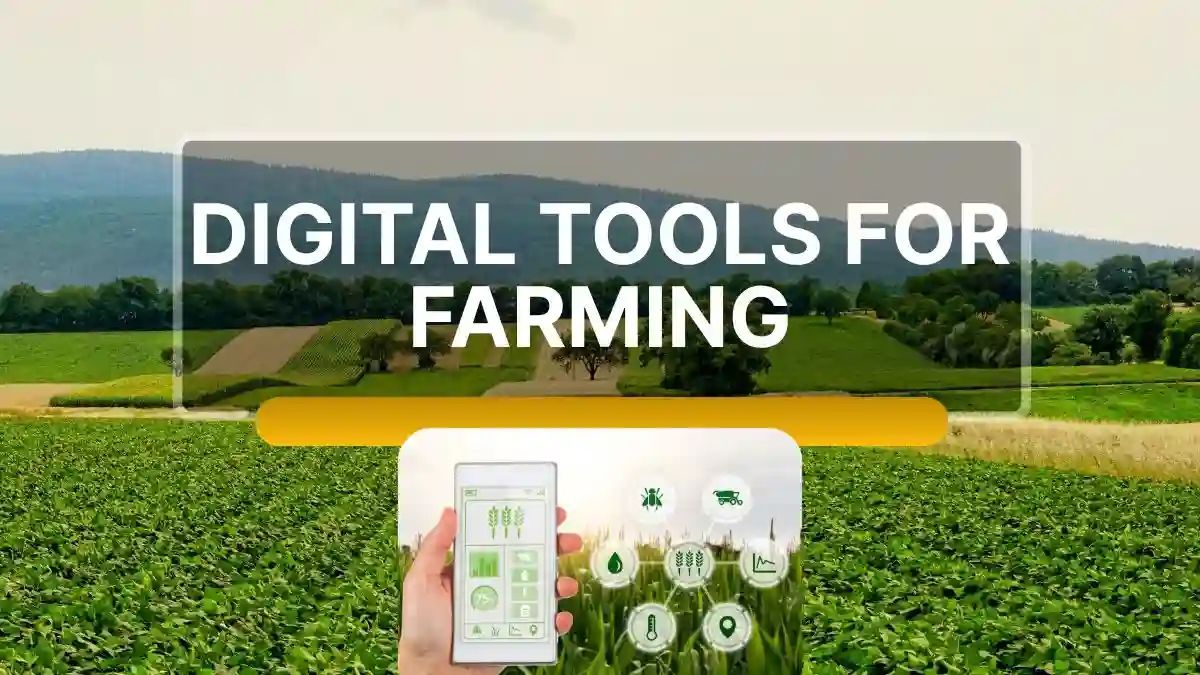
Farming is undergoing a profound transformation. Gone are the days when intuition and weather were the only tools used for farming. Today, agriculture is becoming more and more data-driven, accurate, and interconnected, thanks to digital tools for farming.
Digital farming technologies are now a necessity, not a luxury. These tools help in making informed and smart decisions, optimise resources, and cultivate greater success. Check out the Current Punjab Mandi Rate in the Shuru app.
In this blog, we will take a look at the latest tools used in farming and how to use these tools to make farming easy and sustainable.
Farm management software:
The farm management software (FMS) is a very useful tool in farming. It solves multiple problems. FMS tracks individual field performance, analyses field data, and even assists with financial planning. It tracks and tells when to input water and which area needs fertilisers.
It also helps in allocating resources as efficiently as possible, particularly when dealing with a variety of crops and soil types. Gathering all of your farm’s data in one location gives you a comprehensive picture of your operations, allowing you to spot inefficiencies and seize opportunities. Also, check the mandi trends in Uttar Pradesh Mandi Bhav.
Weather forecasting tools and soil monitoring sensors
Farming depends on local weather patterns. Modern digital weather systems provide hyper-local, real-time data and predictive analytics, whereas earlier approaches depended on experience and crude forecasts.
Computer and smartphone applications can offer hourly updates on wind speed, temperature, humidity and precipitation. Some even provide long-range projections, which can help you more confidently plan your planting, irrigation, and harvesting operations.
Imagine being able to plan irrigation schedules and avoid water wastage by knowing the exact time of the next heavy rainfall, which is a big advantage.
Directly buried in the ground, digital soil sensors offer real-time data on vital characteristics like temperature, pH, moisture content, and nutrient concentration (N.P. and K).
Internet of Things Devices
IoT devices are interconnected devices that are embedded with sensors and software. These technologies allow farmers to connect and exchange data over the internet. It replaces labour-intensive tasks.
Cloud-based Platforms
Cloud-based platforms transform the way farmers handle their software and data. Rather than depending on the farm's physical servers, data and apps are kept and accessed online, in the "cloud."
Blockchain technology
This digital tool for farming is related to data transparency in agricultural supply chains. Blockchain enables quick tracking of the impacted product back to its source in the event of a food safety issue or recall, reducing the damage and safeguarding the public's health.
Blockchain-based smart contracts can reduce delays and the need for middlemen by automating payments to farmers upon verified produce delivery.
Artificial intelligence
This digital tool for farming is not unknown to anyone. AI helps in making data-based decisions and identifying patterns in farming that humans can not identify easily. Integrating AI with farming software can enhance their productivity and decision-making.
Drones, GPS and GIS
Drones are small flying devices that have a camera (multispectral, thermal) and sensors. They provide information about crop health, nutrient deficiencies, irrigation issues, and create maps, etc.
GPS (Global Positioning System) technology helps in precise field mapping and centimetre-level accuracy in operating tractors and other farm equipment. Also, check the price of onions in Madhya Pradesh Mandi.
GIS (Geographic Information Systems), on the other hand, enables farmers to see and analyse spatial data about their farm. Within fields, this potent mix aids in the creation of highly targeted management zones.
Sustainable farming
Digital tools for farming increase sustainable agriculture. Vertical farming helps in growing more crops in a small space. It helps in saving resources like water, fertilisers, and pesticides. A hydroponic system is another sustainable method.
Challenges in optimising digital tools for farming in India
Although the digital tools for farming are a promising advancement in agriculture to increase the production and quality of crops and soil, optimising these tools in rural areas comes with several challenges.
These tools can be expensive, and there’s a learning curve associated with new technologies. Connectivity is another issue; there is either no or slow WiFi and internet in rural areas. Also, check the mandi price in Dabra Mandi.
However, governments, universities and private companies are continuously working to address these challenges. There are training programs, propagation of digital tools to rural areas and their benefits.
Conclusion
The agricultural industry is undergoing a digital transformation that is turning it from a labour-intensive, unpredictable endeavour into a data-driven, accurate, and sustainable business. Farmers can achieve previously unheard-of levels of productivity, efficiency, and profitability by embracing digital farming tools, such as IoT sensors, drones, online markets, and advanced farm management software and real-time weather forecasts.