



12 Standing Yoga Poses 2025 | Standing Yoga Asanas Step By Step
Standing yoga poses are the cornerstone of yoga, supporting a large portion of our practice. These poses are dynamic and foundational, far from simple, and they encourage us to reach for the sky while also establishing a strong connection with the ground beneath our feet.
They serve as potent metaphors for how we maintain our composure in the face of life's turbulence and are the place where we develop a deep sense of stability, inner strength, and grounding. As we work through these postures, we'll learn how they improve our attention, endurance, and sense of empowerment in addition to strengthening our physical bodies, from our open chests and balanced minds to our powerful legs and engaged core.
1. Mountain Pose (Tadasana)
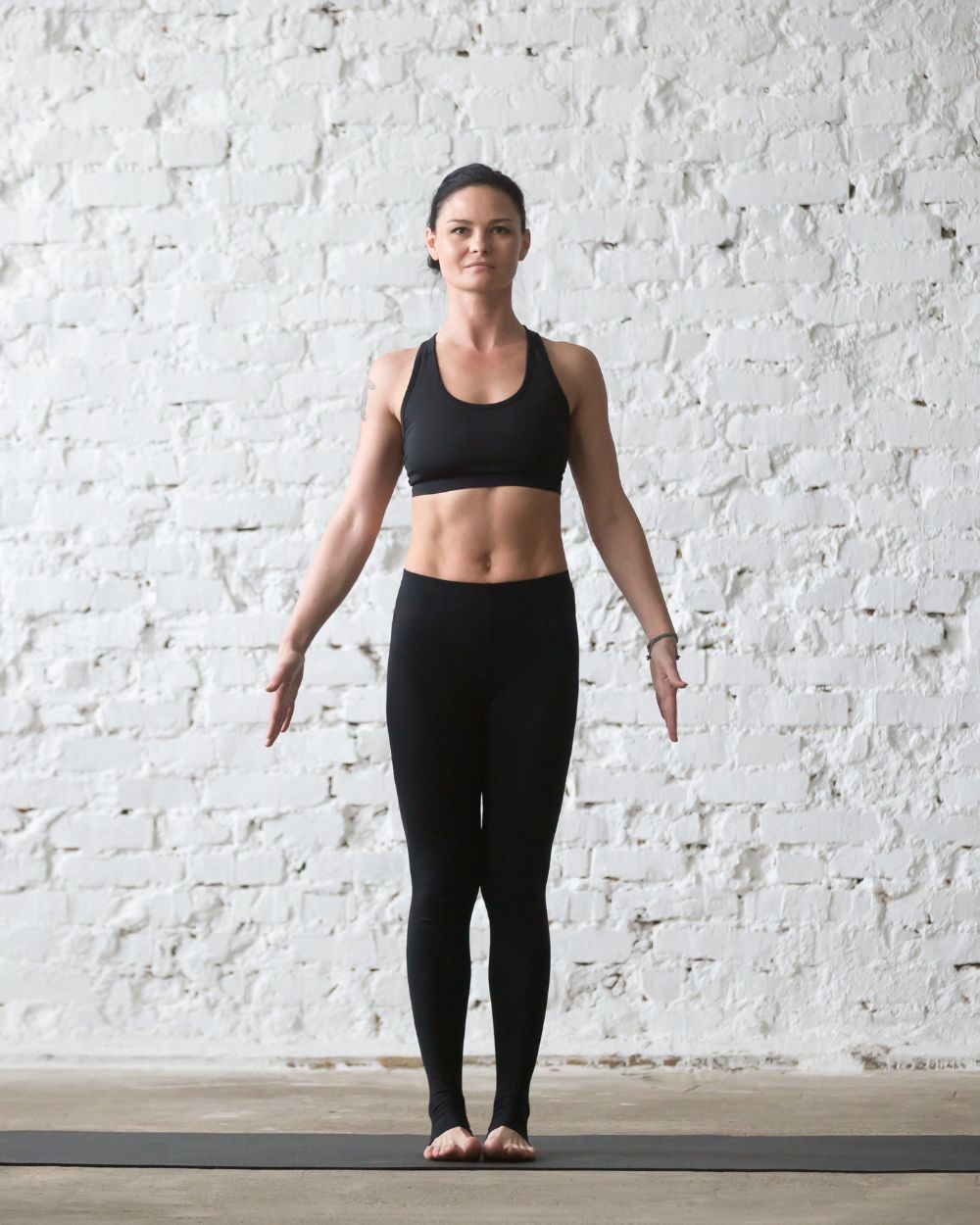
Sanskrit Meaning: The meaning of Tada is mountain and it means mountain pose.
Yoga Level: Beginner
Benefits: This standing yoga pose is good to enhance your posture and balance. It is beneficial for the body's stability. It strengthens the thighs, ankles. It also increases confidence.
Step by Step:
-
Stand with your feet apart on a mat or the floor to begin the pose.
-
Place your arms, palms forward, on the side of your body. Put pressure on your foot and feel the ground.
-
Gently lift your heels and balance the pressure of your body on your toes.
-
Keep your face straight and close your eyes.
-
Take a breath in when you pull up your legs and breathe out when you relax your body.
-
The posture is very good to increase confidence and establish the balance of the body.
2. Tree Pose (Vrksasana)
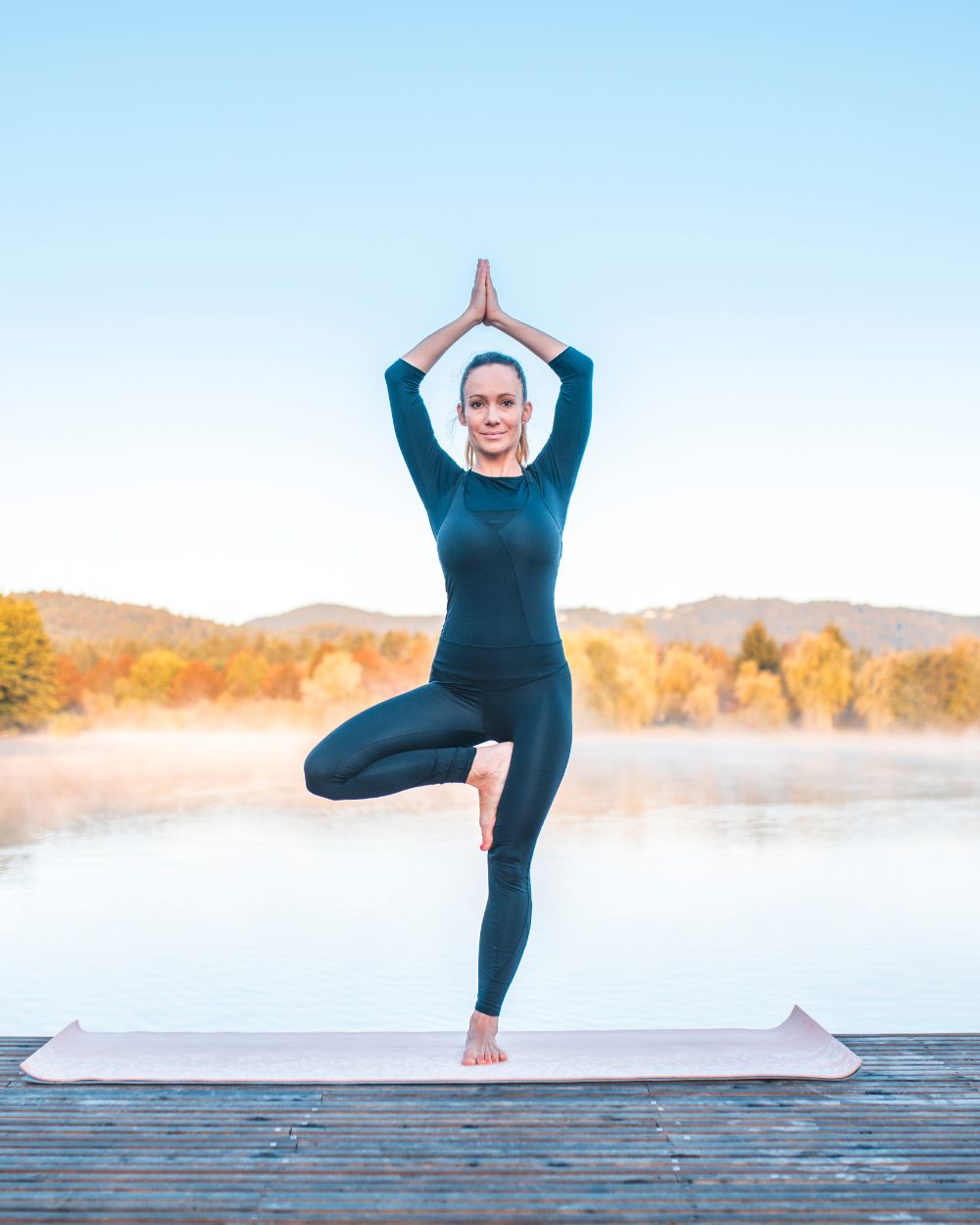
Sanskrit Meaning: Vrksa means tree, and asana means posture
Yoga Level: Beginners to intermediate
Benefits: This yoga standing posture is good for increasing balance and strengthening the ankles, calves, thighs and spine. It helps in opening of hips, improves concentration and focus.
Step by Step:
-
This pose is different from the mountain pose, as in this pose, you have to balance the body on one leg.
-
Put one leg near the knee or thigh of another leg and try to balance the body.
-
Next, as you balance the body, take both hands above your head and join them in namaskara pose.
-
The hands can also be joined in a prayer position at your heart centre.
-
This pose maintains a strong spine, legs and hands. Try to keep your spine straight and shoulders relaxed, and breathe steadily.
3. Standing Forward Bend (Uttanasana)
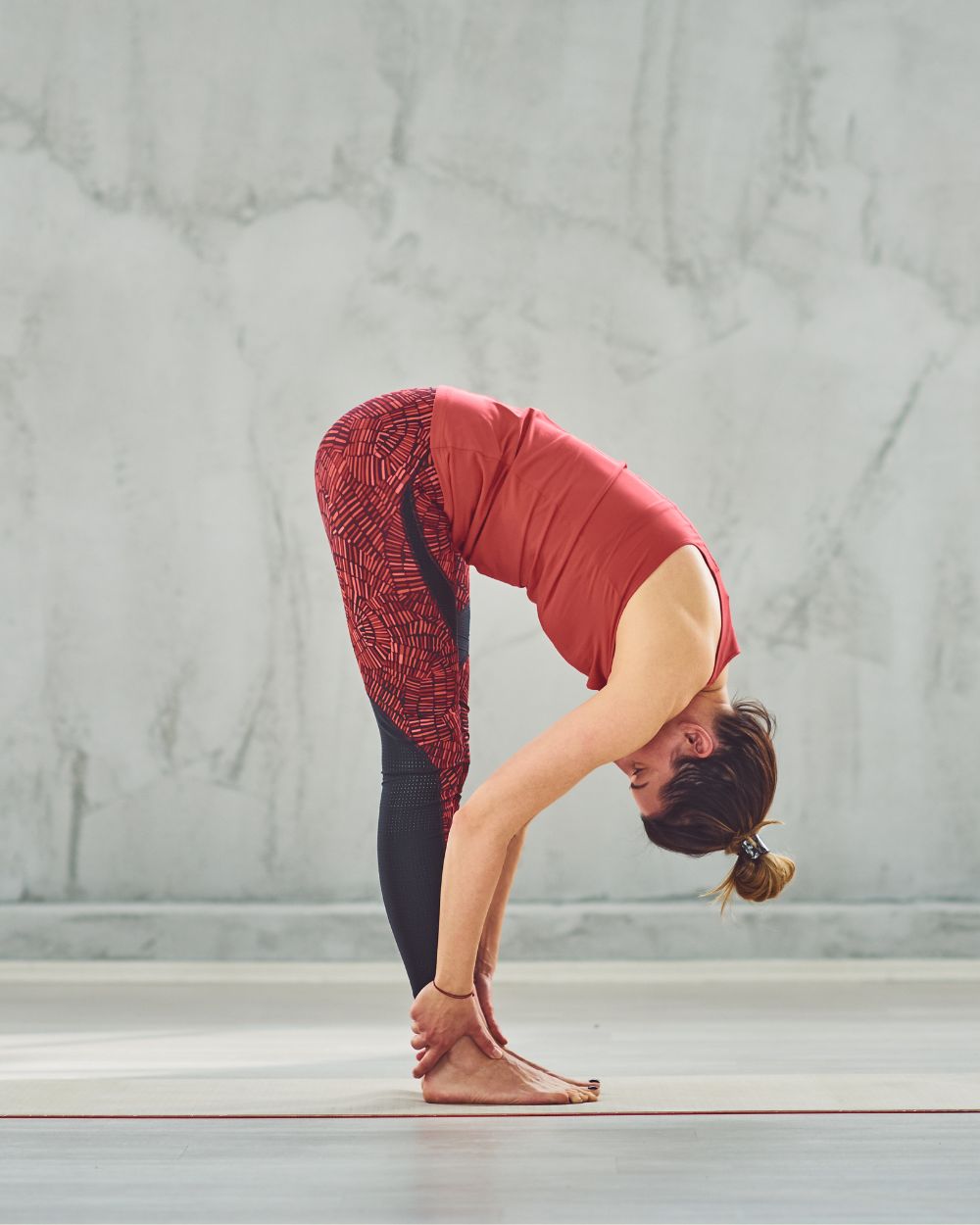
Sanskrit Meaning: “Ut” means intense and powerful, “tan” means stretch and asana means posture.
Yoga Level: Beginner
Benefits: The standing yoga poses for beginners stretch the entire back, including the hamstrings, calves, and hips. It relaxes the brain, relieves minor sadness and stress, and can help treat anxiety and exhaustion. Additionally, it stretches the spine softly.
Step by Step:
-
Begin with the mountain pose on your mat or ground and place your feet at shoulder level.
-
Bend your body and try to touch the floor while keeping your spine straight.
-
Let gravity gently draw you further into the stretch while you hold for a few breaths.
-
Press through your feet, contract your core, and take a deep breath before slowly rolling or hinging up with a long spine.
-
Keep your head lightly hanging and do not keep tension in your neck. You can shake your head slowly.
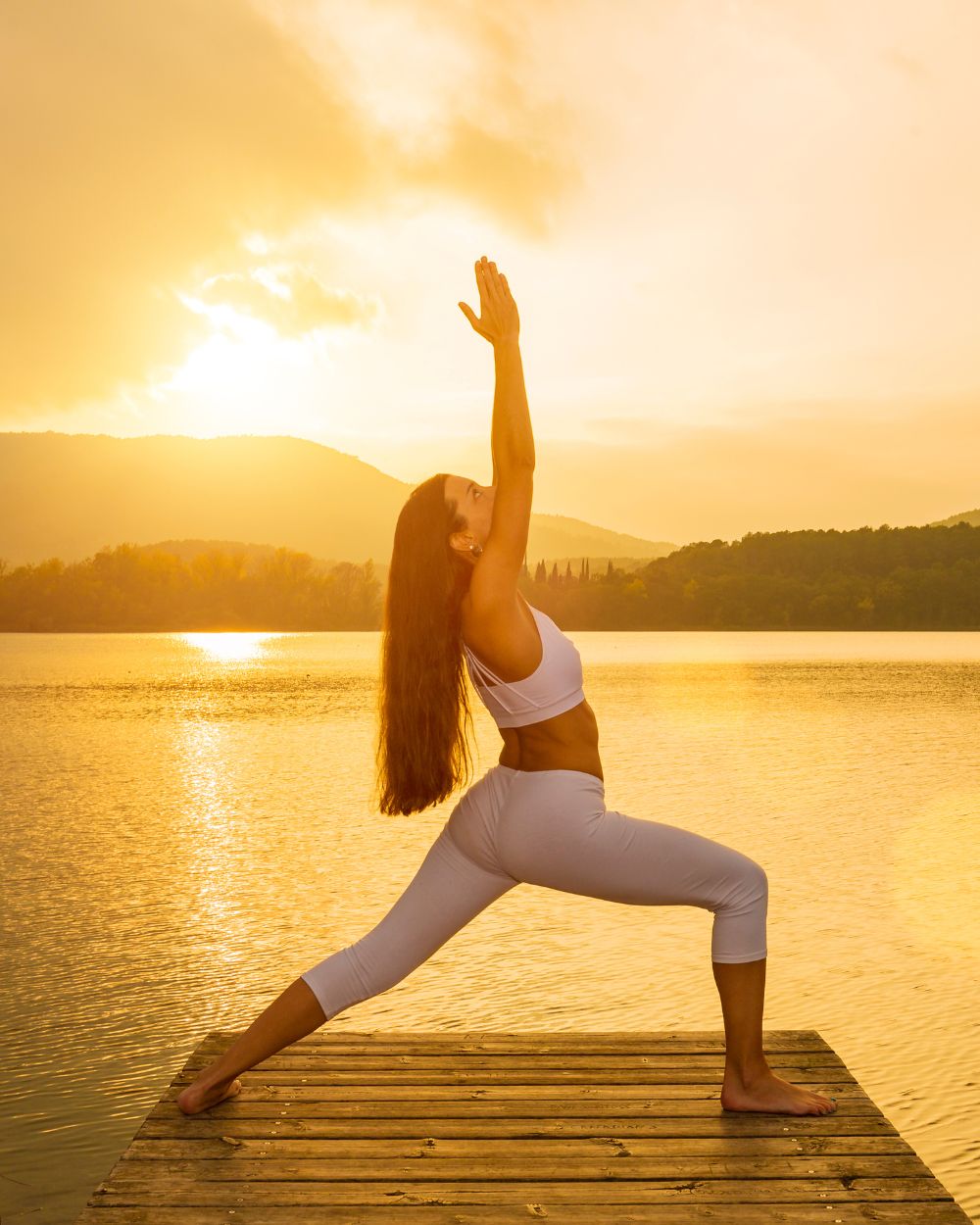
4. Warrior Pose I and II (Virabhadrasana I and II)
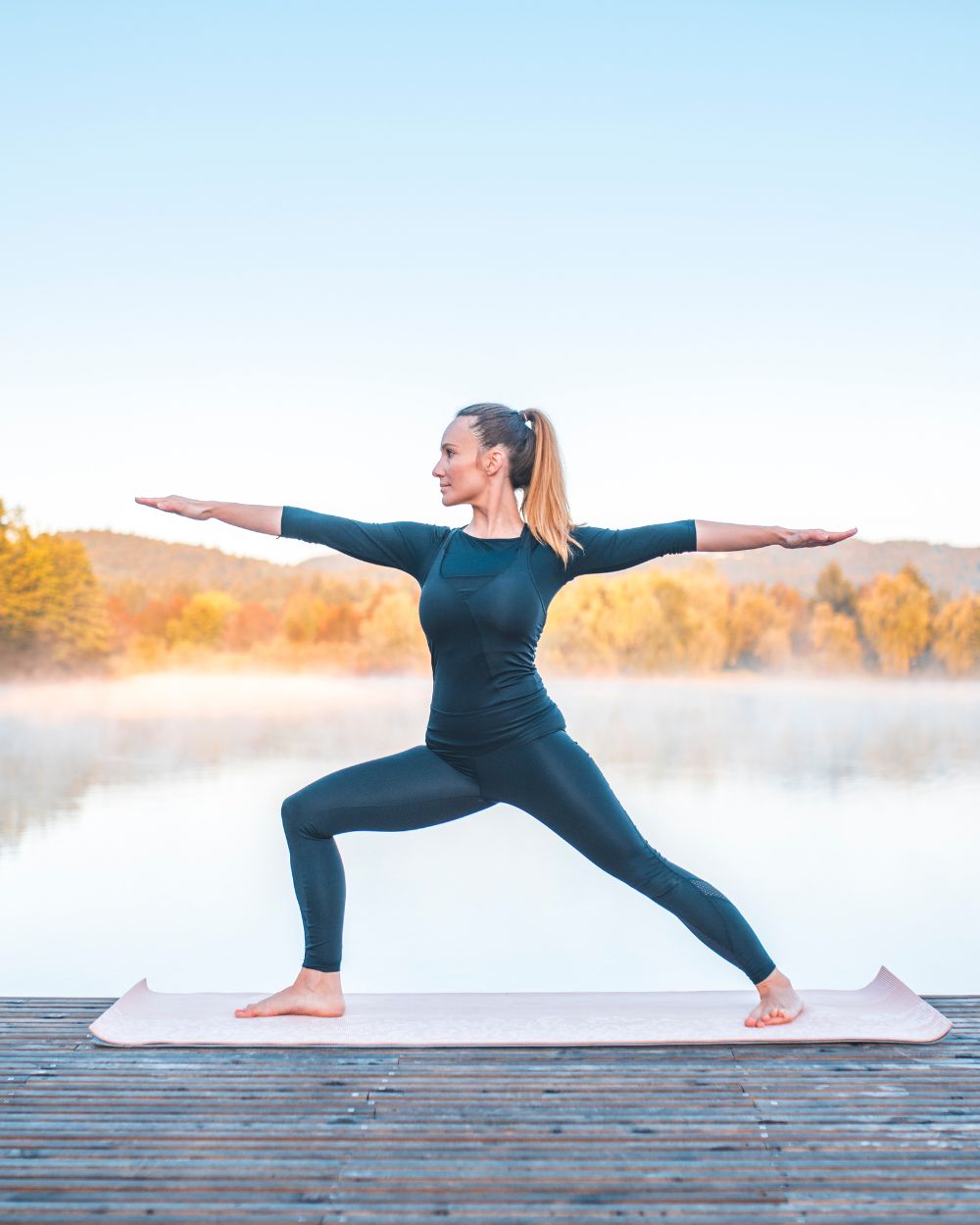
Sanskrit Meaning: Virbhadra means mythical warrior and asana. This is a warrior pose.
Yoga Level: Beginner to Intermediate
Benefits: You can strengthen your legs, core, and glutes with this standing yoga pose. It stretches the hips, chest and shoulders. It improves the balance of the body and increases flexibility and confidence.
Step by Step:
- Begin with the mountain pose and then step your right foot back, and bend your left leg.
- Straighten your hands above your head and bend your body to the right.
- Raise your chest and look towards your hands with a gentle forward or slightly upward glance.
- Feel the strength in your legs as you hold this steady and powerful stance for a few breaths.
- Step forward to repeat on the opposite side after taking a breath to straighten your front leg.
For Warrior II
- Stay in the warrior I position and put your hand down.
- Stretch your arms straight out to the sides at shoulder height, palms down. Keep your shoulders relaxed and down..
- To keep your front knee from folding inward and to stabilise your body, engage your core.
- As you maintain this strong and expansive position for a few breaths, feel grounded but open.
- To straighten your front leg, take a breath, let it out, and then do it again with the opposite leg.
5. Half Moon Pose (Ardha Chandrasana)
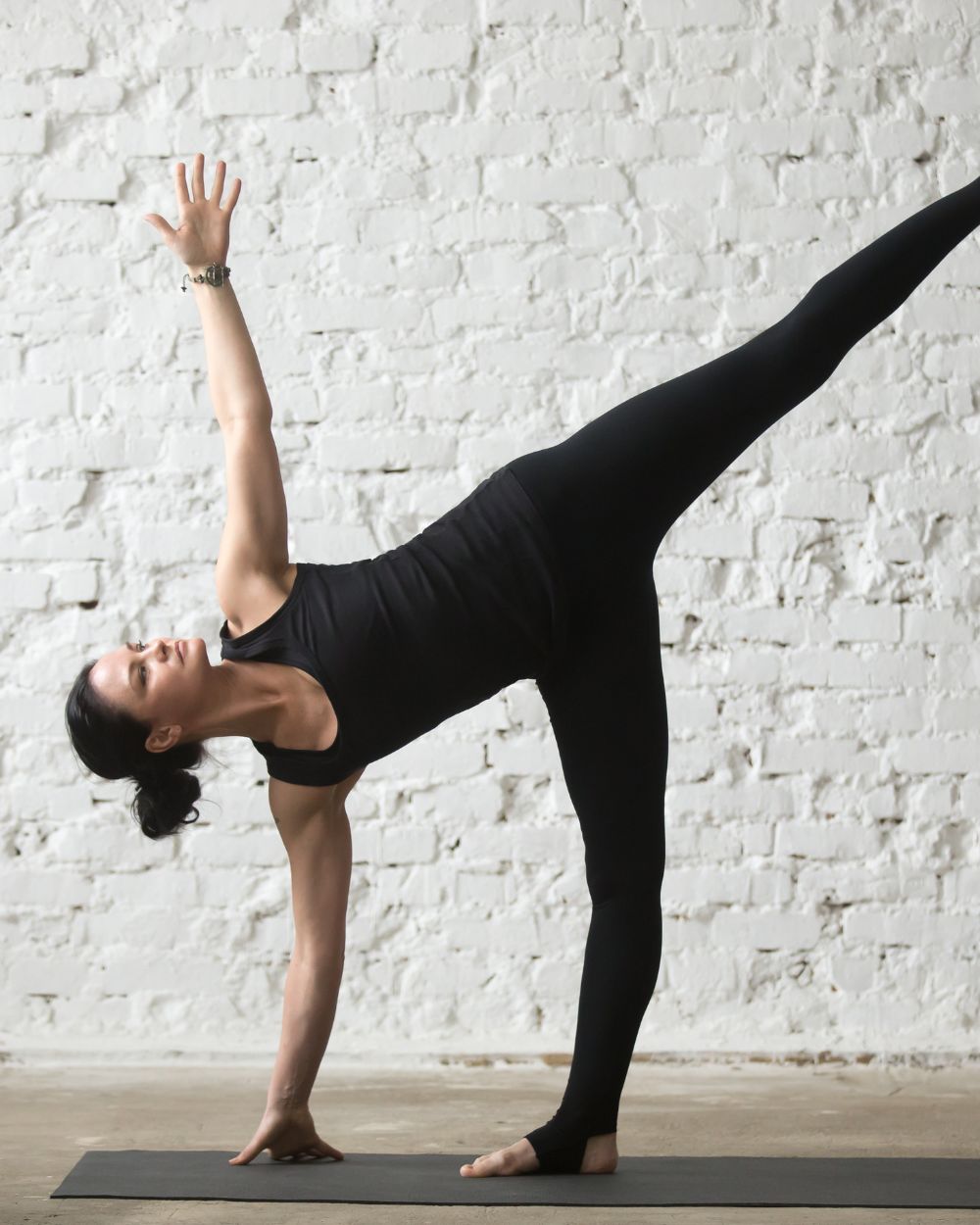
Sanskrit Meaning: Ardha means half, and chandrama means Moon. Thus, half moon pose.
Yoga Level: Intermediate
Benefits: This difficult balancing posture stretches your hamstrings, groin, and spine while strengthening your ankles, knees, thighs, and glutes. It can improve balance and coordination, boost confidence, and energise the body.
Step by Step:
- Stand on the ground with feet on shoulder level.
- Bend your front knee slightly left side and place your hand on the floor about 6-12 inches in front of your left foot.
- Try to raise your right leg parallel to the floor while keeping your hand on the ground.
- Raise your right arm straight up towards the ceiling, with your right shoulder directly over your left shoulder. It should feel as though two panes of glass are pressing against each other.
6. Extended Side Angle (Utthita Parsvakonasana)
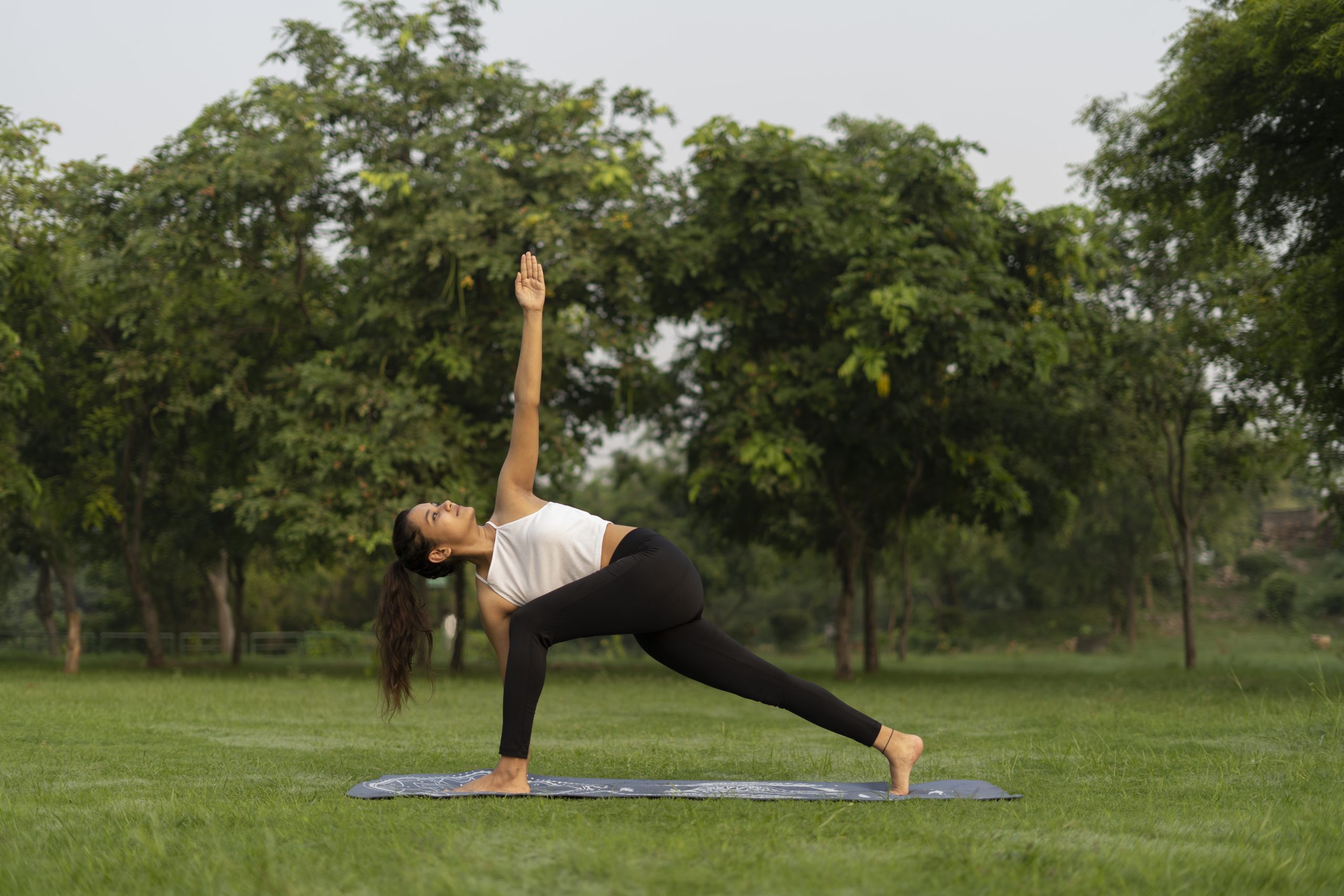
Sanskrit Meaning: Utthita means "extended," Parsva means "side," Kona means "angle.”
Yoga Level: Beginner to Intermediate
Benefits: The standing yoga poses stretch the entire side of your body, from your heel to your fingers. It stretches the shoulders, hamstrings, and groins, strengthens the legs, knees, and ankles, and enhances digestion and endurance.
Step by Step:
- Start from Warrior II Pose with your left foot forward, your left knee bent, and arms extended.
- Put your left hand on the floor or a block inside or outside of your left foot, if you are flexible, or place your left forearm onto your left thigh.
- Straighten your upper right arm towards the ceiling, then raise it above your head and place it next to your right ear. Ensure your palm is facing downward.
- From the outside edge of your right back foot to your right fingertips, form a long, continuous line of energy.
- If it is comfortable for your neck, open your chest towards the ceiling and turn your torso slightly upwards while gazing up at your outstretched hand.
7. Triangle Pose (Utthita Trikonasana)
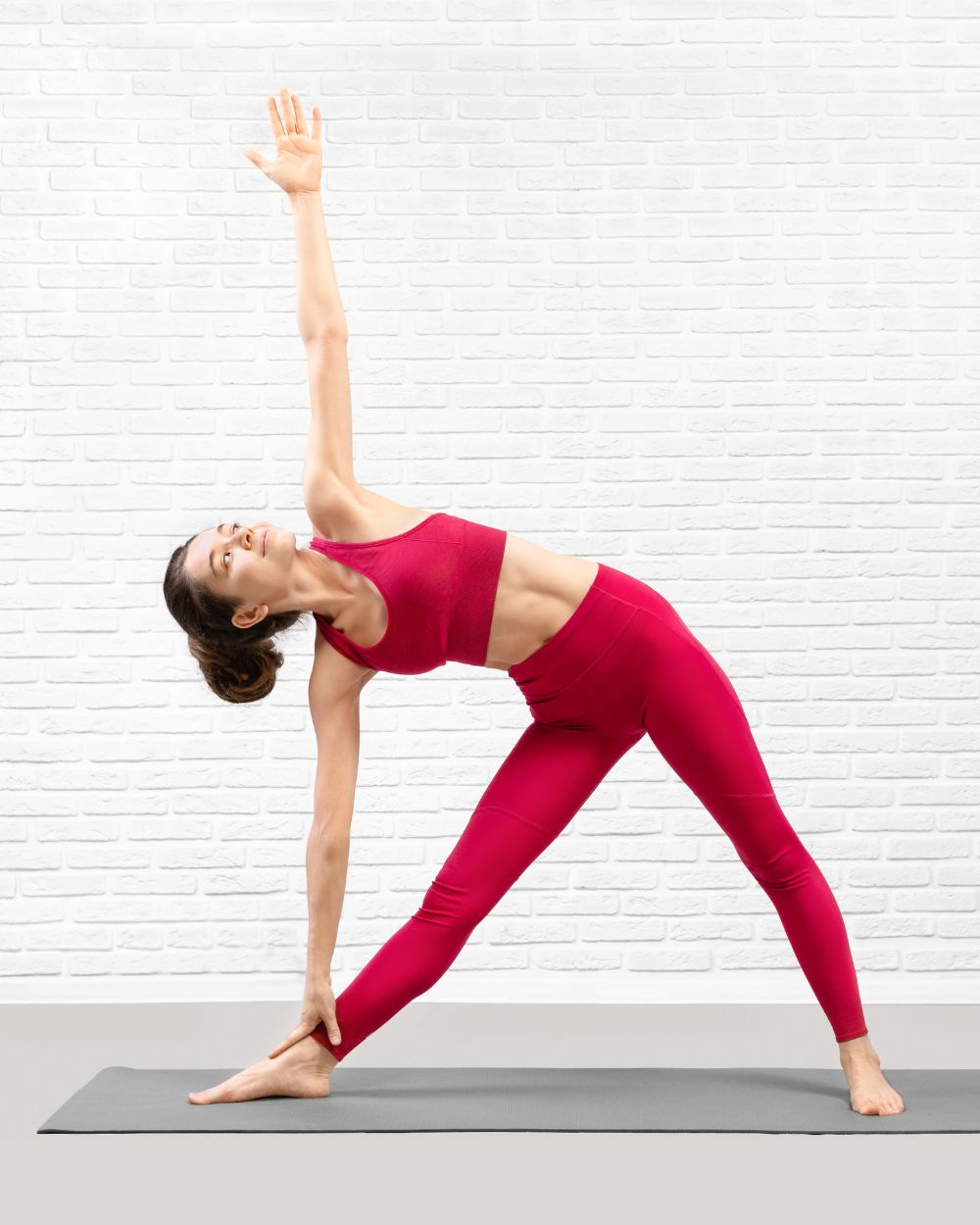
Sanskrit Meaning: Utthita means "extended," Tri means "three," Kona means "angle.”
Yoga Level: Intermediate
Benefits: This yoga position helps to stretch the ankles, knees, and legs. It opens the shoulders, chest, and hips. It improves stability and balance, enlarges the shoulders and chest, and eases back and sciatica pain.
Step by Step:
- Stand from a wide stance about 3-4 feet apart.
- Now, bend your body to one side and extend your hand forward from the hip of your front leg to your shin, ankle, block, or chair.
- Try reaching your foot from the side. Keep your other hand towards the ceiling, straight with palm open.
- After 30 seconds of maintaining the position, switch to the opposite side and repeat.
- Press through the outside edge of your back foot while maintaining a solid, straight (but not locked) stance.
8. Warrior Pose III (Virabhadrasana III)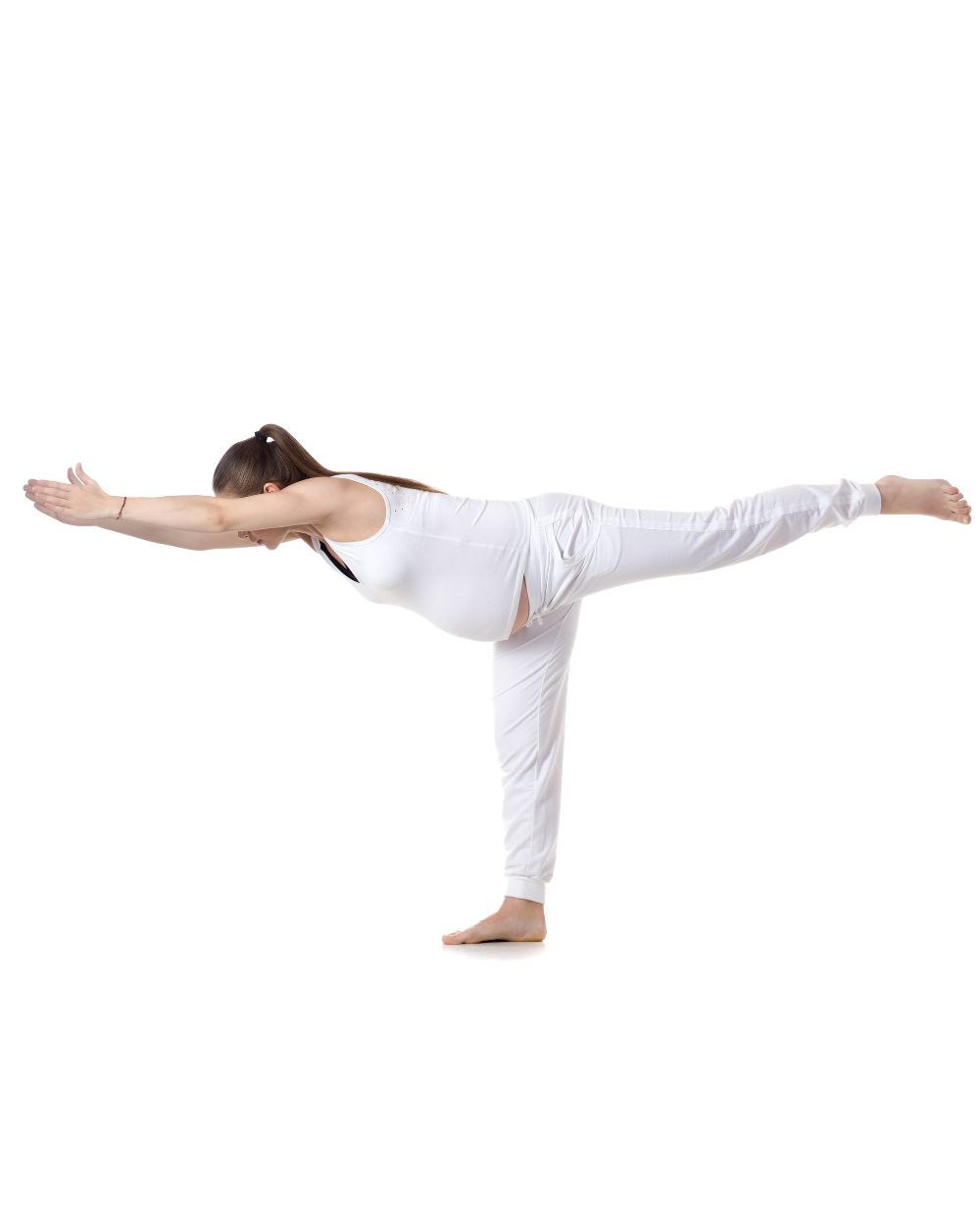
Sanskrit Meaning: Virabhadra is the warrior, and asana is "posture."
Yoga Level: Intermediate
Benefits: This yoga strengthens the ankles, legs, and core. It improves balance, focus, and attention while strengthening the glutes and creating a sense of strength and stability. It's great for developing the synergy of the entire body.
Step by Step:
- Begin in Warrior Pose I with your left foot forward, right foot back, and hands overhead.
- This standing yoga pose balances your body on one leg. Stand on your legs, join and bend your body from your hips towards the front and make it parallel to the ground.
- Extend your hands either alongside your ears and join them in a prayer position.
- Now gently try to lift your one leg. Keep the leg parallel to the ground and balance the body. Look front or downwards.
9. Goddess Pose (Utkata Konasana)
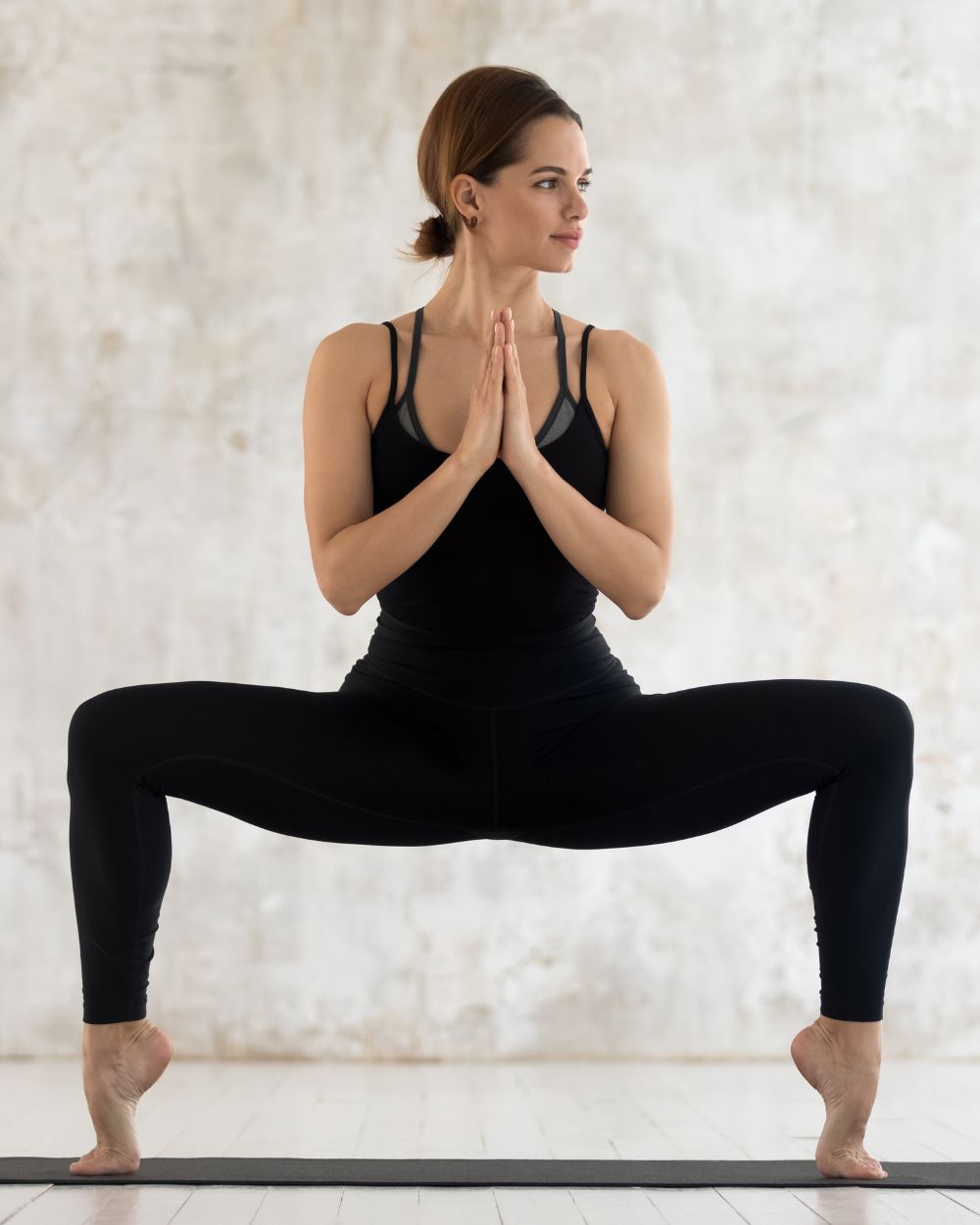
Sanskrit Meaning: The meaning of Utkata is being powerful or fierce, and Konasana means angle-making posture.
Yoga Level: Beginner or Intermediate
Benefits: It strengthens the glutes, core, and inner thighs. It opens the hips and hips and chest. It enhances stability and balance and increases the energy of the body. It helps in feeling empowered and confident.
Step by Step:
- To start the standing yoga pose, stand on the floor or a yoga mat, keeping your legs parallel to your shoulder level.
- Bend your knees and try to make them parallel to the floor. Turn your foot to the outer sides.
- If you want to go to the intermediate level, raise your heels and try to balance your body on your toes.
- Maintain a long spine, relaxed shoulders, and an upward gaze. Pull your tailbone down a little by using your core.
- Feel your legs become stronger as you hold for a few breaths. Bring your feet back together and straighten your legs to release.
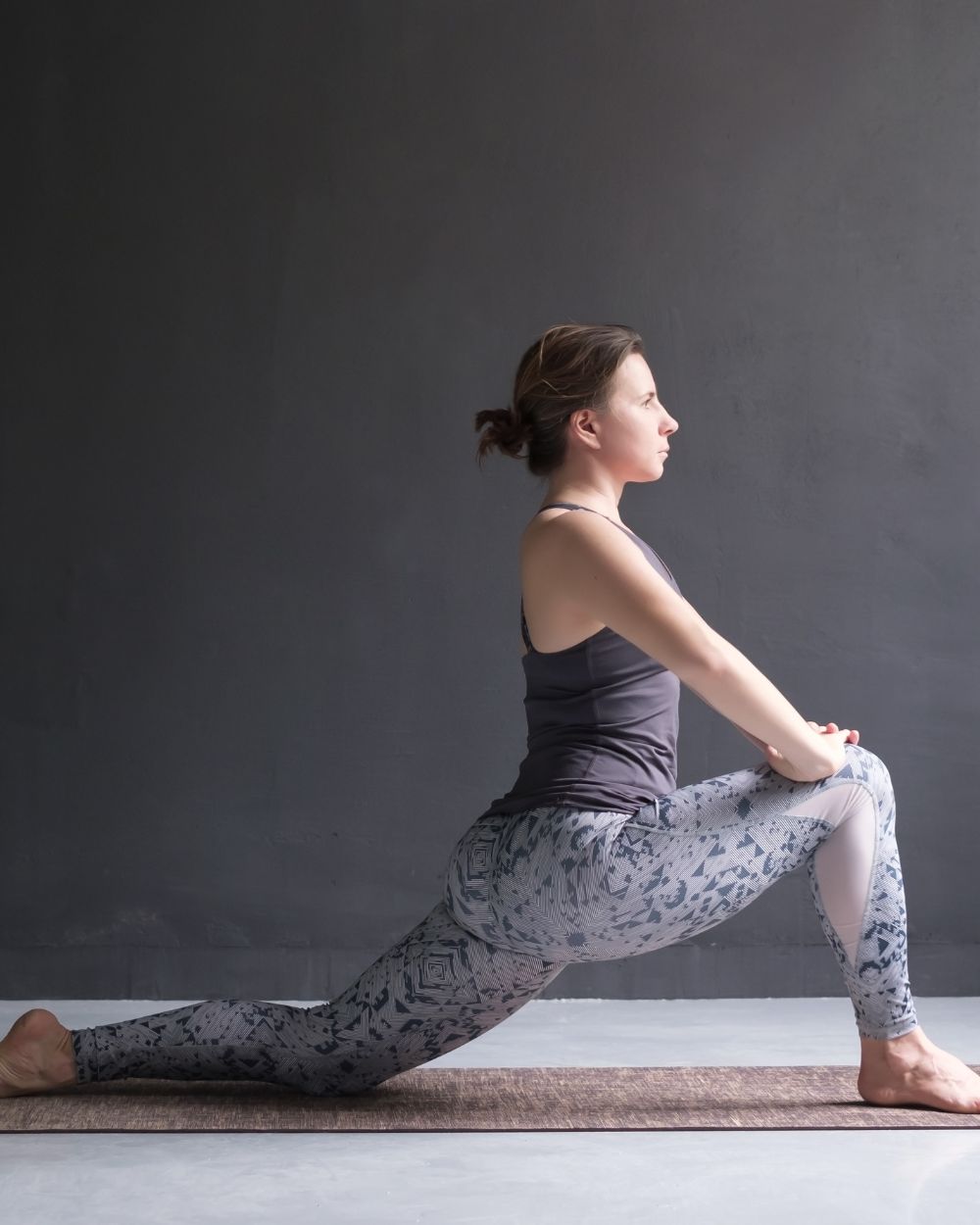
10. Low Lunge Pose (Anjaneyasana)
Sanskrit Meaning: "Ardha" means half, and "Chandra" means the moon.
Yoga Level: Advanced
Benefits: It strengthens the core, glutes, hamstrings, and quads. stretches the back leg's hip flexors, or psoas. enhances stability, balance, and focus. increases confidence and endurance.
Step by Step:
- Align your right knee with your right ankle by stepping your right foot forward between your palms.
- Keep your rear leg straight and firm, and keep your back heel raised (off the ground).
- With your arms extended overhead, palms facing each other, raise your torso upright by using your core.
- Your hips should be squared forward. Make sure your ankle remains stacked over your front knee.
- Feel the strength in both legs and the stretch in the rear hip flexor as you hold for a few breaths.
11. Eagle Pose (Garudasana)
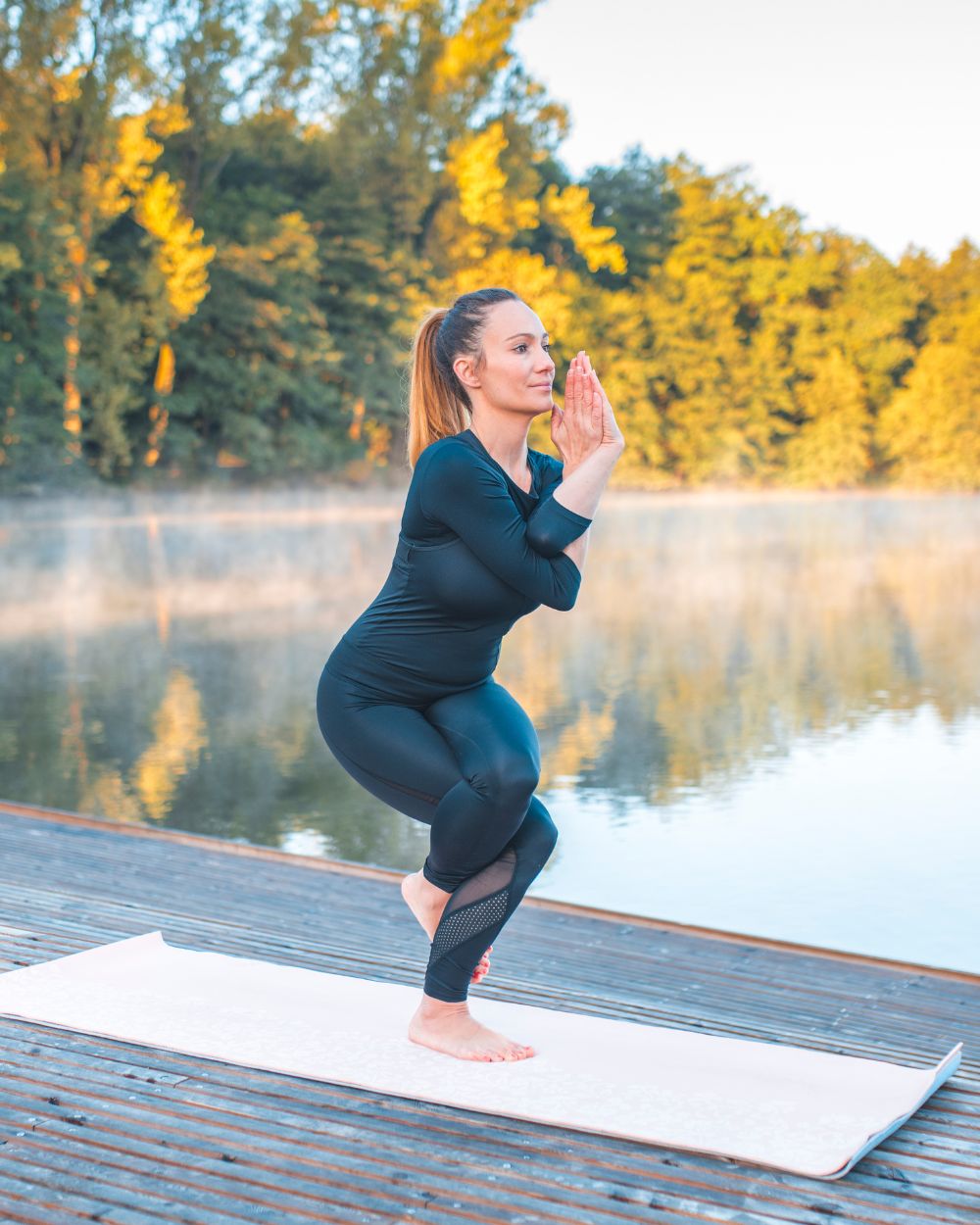
Sanskrit Meaning: Garud is a mythical bird in India, and Garud asanas means Eagle pose
Yoga Level: Advanced
Benefits: This standing yoga pose strengthens the upper back, thighs, calves, and ankles. It stretches the upper back, shoulders, thighs, and hips and enhances concentration, equilibrium, and focus. It eases shoulder and upper back tension.
Step by Step:
- Start this pose with the Mountain Pose.
- Bend your knees slightly, cross your right thigh over your left, and raise your right foot. If you can, wrap your right foot around your left calf.
- Bend your elbows and extend your arms forward, then place your right arm beneath your left.
- Clasp your hands together, put your palms together, or just give yourself a shoulder hug.
- Lift your elbows off your chest and droop your shoulders.
- Maintain a long spine while lowering your hips as though you were sitting in a chair.
- For balance, hold for a few breaths while concentrating on one location.
- Return to Mountain Pose after relaxing your arms and legs. Continue on the opposite side.
12. Chair Pose (Utkatasana)
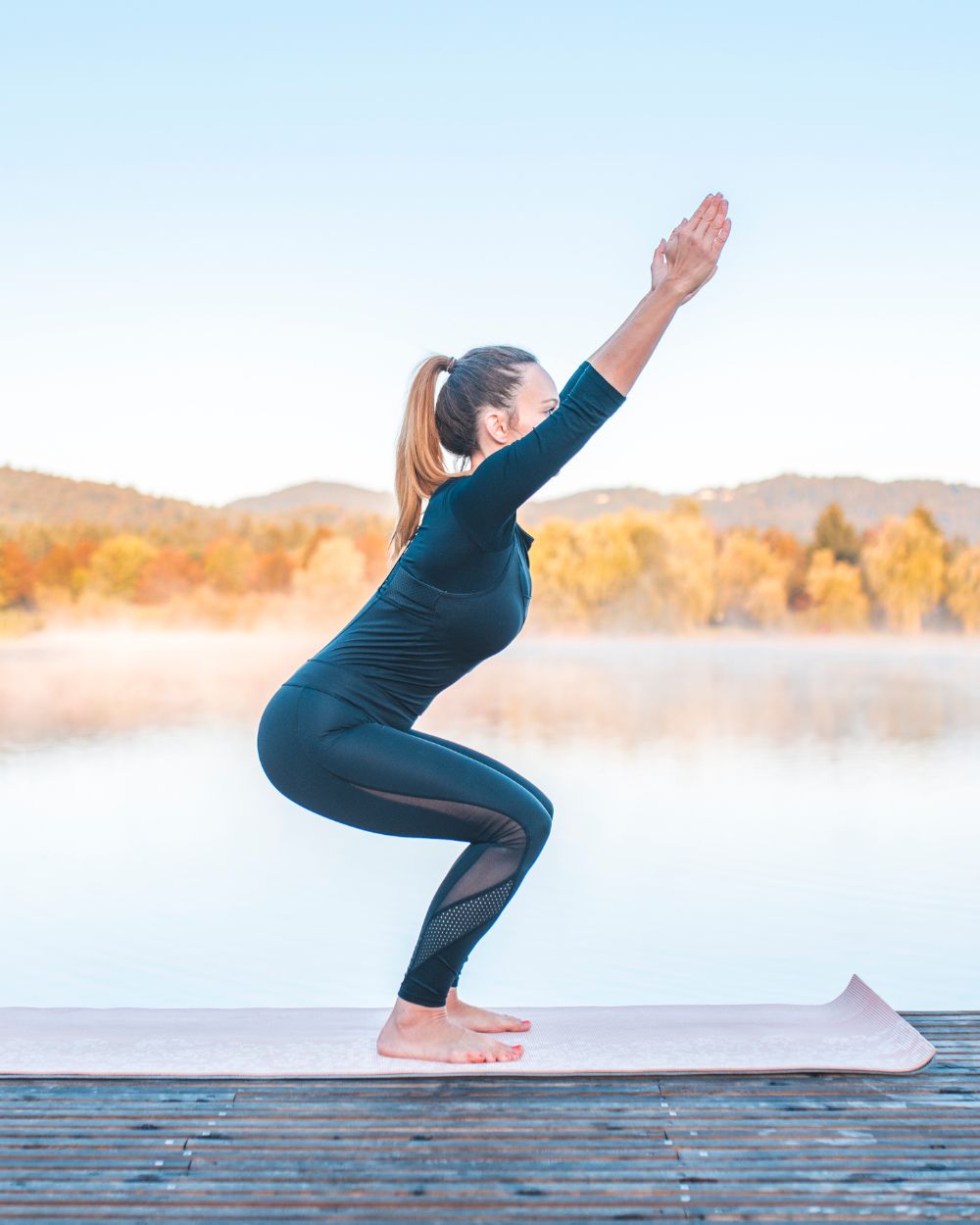
Sanskrit Meaning: "Utkata" means fierce, powerful, or intense. So, it's "Fierce Pose" or "Powerful Pose."
Yoga Level: Advanced
Benefits: This standing posture of yoga is good for increasing balance and body awareness. It strengthens the spine and core. It stretches the chest and shoulders when the arms are outstretched and increases stamina and heat. It enhances the energy of the body.
Step by Step:
- This standing yoga pose begins with standing on the ground or a yoga mat. Keep the legs slightly wide from shoulder level.
- With your shoulders relaxed, take a deep breath and raise your arms overhead, palms facing one another.
- Breathe out and bend your knees deeply, bringing your hips back and down as though you were sitting in a chair.
- Make sure your toes are still visible; if not, slightly reposition your weight. Maintain a long spine and an active core.
- Feel your thighs burn as you hold for a few breaths. Inhale to stand tall and lower your arms to release.
Standing yoga poses are those that can be performed anywhere to increase balance and stability. It has physical and mental benefits. It strengthens the legs and core. There are poses from beginner level to advanced level. These poses are very good for increasing confidence and a sense of presence. The standing yoga position enhances self-awareness that supports both on and off the mat.